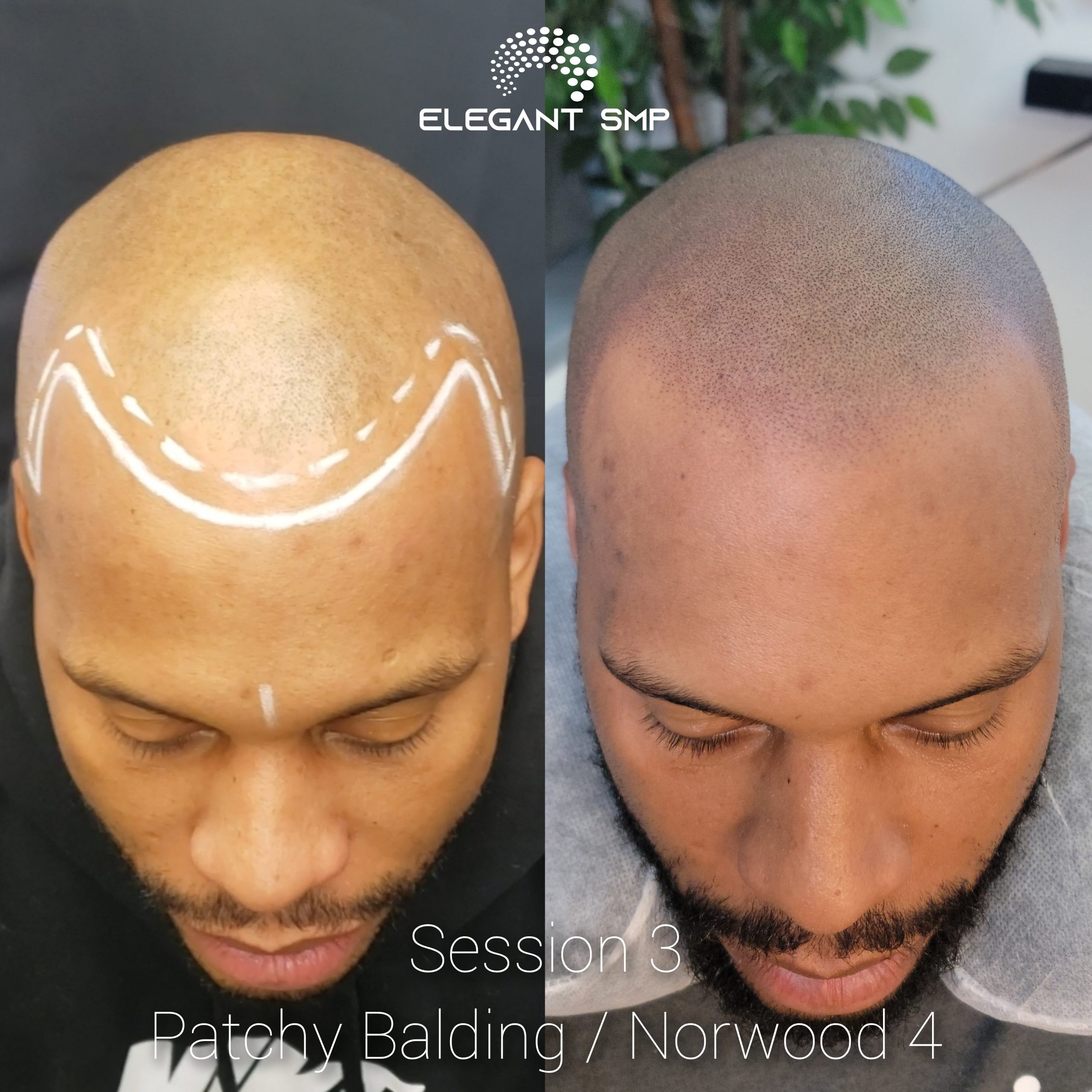
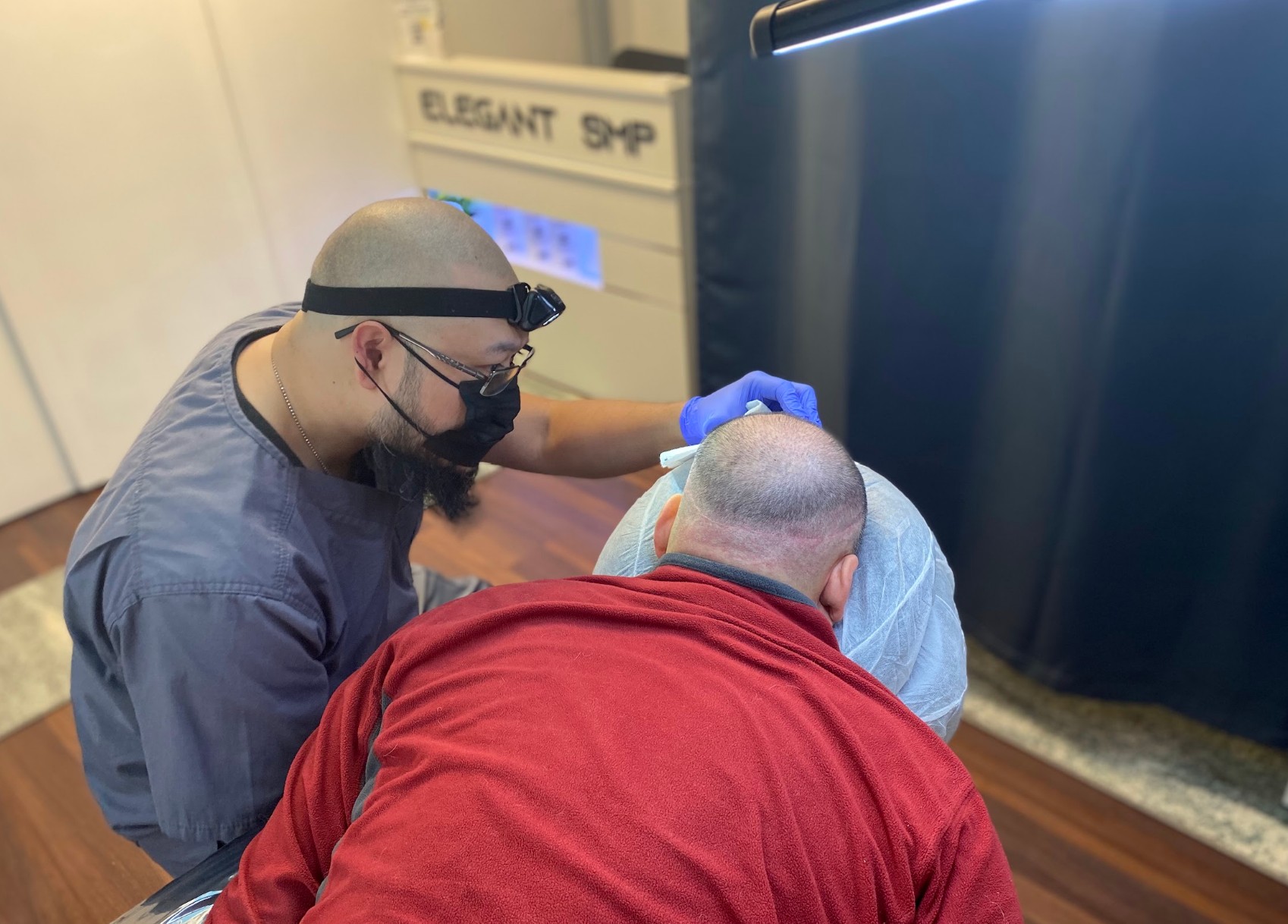

One of the first things I tell clients after completing their treatment is that SMP is a long term commitment, not a one-time procedure. The results are built to last, but they are not built to last forever without any maintenance. At some point down the road, most clients will need a touch-up. Knowing when that time has come makes all the difference between staying ahead of it and letting things go too far.
Here is what to look for and what to expect when you come back in.
Table of Contents
Why SMP Fades Over Time
Before getting into the signs, it helps to understand why fading happens in the first place. SMP pigment is placed in the upper dermis of the scalp, a shallow layer by design. That shallow placement is what makes the results look natural and undetectable. But it also means the pigment is subject to the skin's natural renewal process over time.
Your body's immune system gradually works to break down foreign particles in the skin. The pigment molecules used in SMP are designed to be small enough that the lymphatic system can carry them away slowly over years. This is actually intentional. Larger molecules that couldn't be cleared would make SMP truly permanent and impossible to adjust as your appearance changes with age. The gradual fade is a feature, not a flaw. It just means maintenance is part of the picture.
UV exposure accelerates this process significantly, which is why sunscreen is non-negotiable for anyone who wants to stretch the time between touch-ups. Skin type plays a role too. Oily skin clients tend to see faster fading because sebum production pushes pigment outward through the skin's surface more aggressively than normal or dry skin.
The Signs You Need a Touch-Up
Your Pigment Has Lost Its Crispness
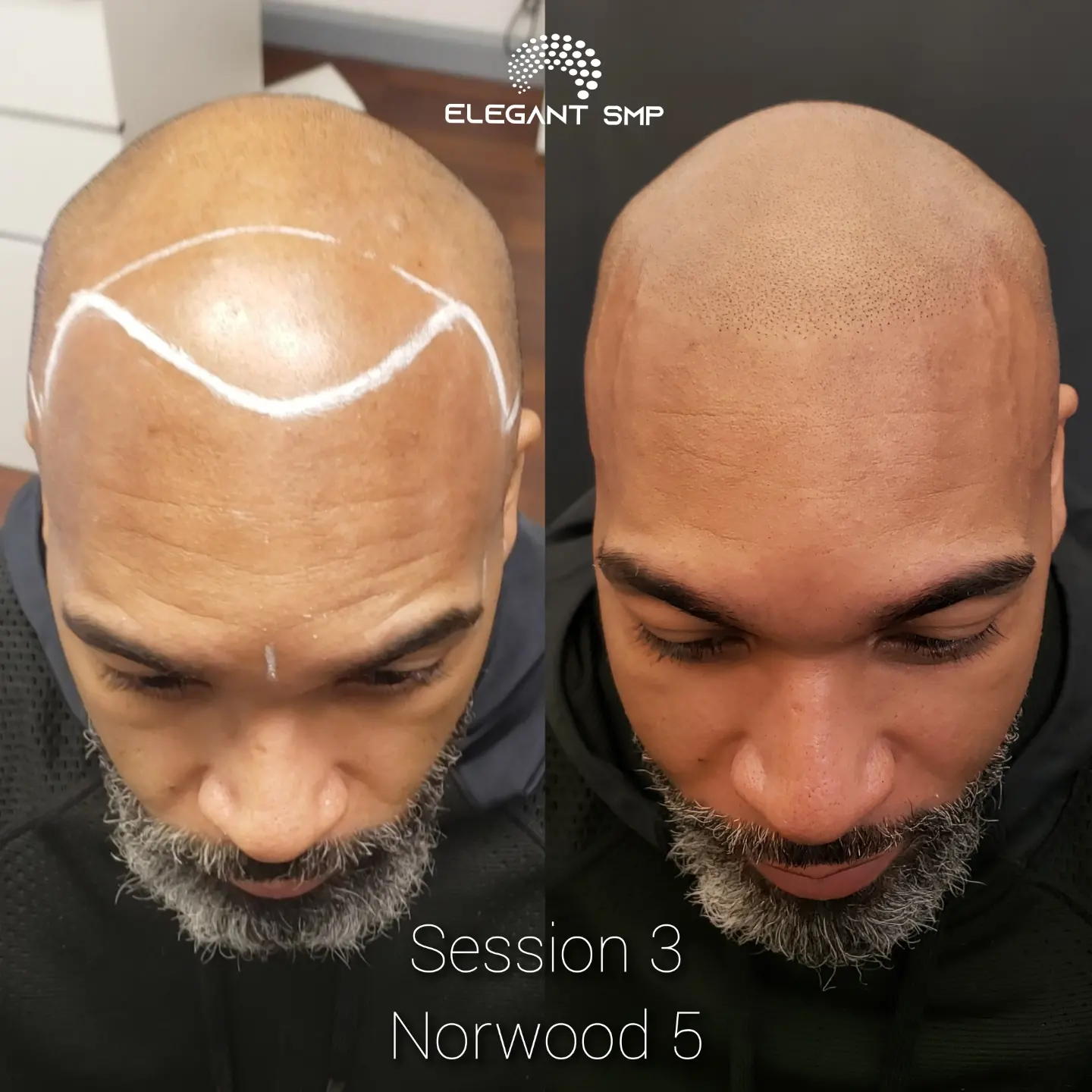
The most obvious sign is that the dots no longer look sharp. Fresh SMP has clean, well-defined dots that mimic the look of a closely shaved head. Over time, as the pigment naturally softens, those dots can lose their definition and start to look blurry or diffused. If you look at your scalp and the work that used to look precise now looks soft and indistinct, that's your signal.
Significant Fading Across the Scalp
Some fading is normal and expected. The result actually looks more natural with a slight softening over time. But when the pigment has faded to the point where density is visibly reduced and the overall coverage looks thin or patchy, it's time to come back in. This is especially noticeable if certain zones of the scalp are fading faster than others. The crown, the hairline, and areas near scars can all fade at different rates depending on skin behavior in those specific areas.
Your Hairline Has Lost Its Definition
The hairline is usually the first place clients notice change. A well-done hairline has soft, graduated edges that look completely natural. When fading hits the hairline, it can look uneven, blurry, or less defined than it used to. If you're finding yourself in better lighting thinking something looks off around the front, the hairline is usually where the issue is.
You've Had Heavy Sun Exposure Without Protection
If you've spent significant time outdoors, on vacation, at the beach, doing outdoor work, or anywhere with prolonged sun exposure, and you haven't been consistent with SPF, your SMP has almost certainly faded faster than it should have. UV rays are the single biggest accelerant of pigment breakdown. If this sounds like you, book a consultation sooner rather than later rather than waiting for the fading to get worse.
Your Natural Hair Is Greying
As your hair naturally greys with age, the contrast between your existing hair and the SMP pigment can shift. Pigment that blended seamlessly with dark hair may start to stand out more as the surrounding hair lightens. This isn't a failure of the treatment. It's a natural evolution that a touch-up can easily address by adjusting the pigment shade to match your current hair color.
The Overall Look Feels Washed Out
Sometimes it's not one specific thing. It's just that the whole result no longer has the fresh, sharp quality it once did. If you look in the mirror and the confidence boost that came with your SMP has started to feel less pronounced because the work looks tired, that's a completely valid reason to come in. Touch-ups exist precisely for this.
How Often Should You Expect a Touch-Up?
Most clients at Elegant SMP get their first touch-up somewhere between three and five years after completing their initial treatment. Some clients with great aftercare habits, consistent SPF use, and skin types that retain pigment well can go longer. Clients with oily skin or a lifestyle involving heavy sun exposure may find themselves coming in closer to the two to three year mark.
The honest answer is that there is no universal number. Your skin, your lifestyle, and how well you've followed the aftercare protocol all factor in. What I can tell you is that a proactive touch-up before the fading gets dramatic is always easier and less expensive than waiting until the work has deteriorated significantly.
Touch-Up Pricing at Elegant SMP
A standard touch-up session at Elegant SMP typically runs between $600 and $800 depending on how much work needs to be done and whether you are an existing client.
That said, not every situation calling itself a touch-up is actually a simple refresh. Sometimes clients come in with work done elsewhere that has faded so severely, or was so poorly executed to begin with, that there is barely anything left to work with. In those cases what looks like a touch-up is actually a full treatment, and it gets priced and approached accordingly.
The best way to get an accurate picture of what your specific situation requires and what it will cost is a consultation. Send over a photo and I can assess where things stand before you ever sit in the chair.
What the Touch-Up Process Looks Like
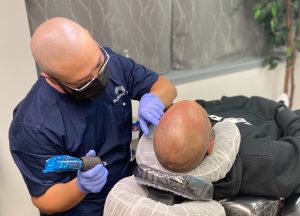
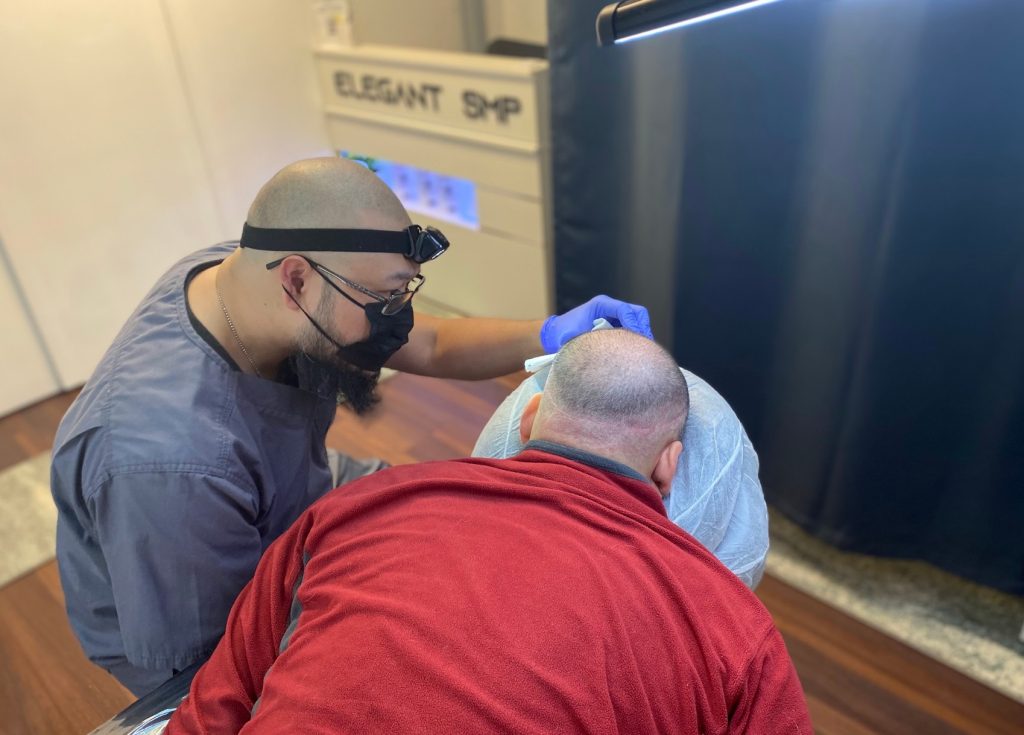
The good news is that a touch-up is significantly less involved than your original treatment. Rather than building everything from scratch over multiple sessions, a touch-up targets the areas that have faded and refreshes the pigment where it needs attention. Most touch-up work can be completed anywhere between two to five hours depending on how much area needs to be addressed.
The pigment shade is assessed and matched to your current hair color before any work begins. If your hair has changed since your original treatment, that gets factored in. The healing process after a touch-up is the same as after any SMP session, so the same aftercare protocol applies.
The Bottom Line
SMP is one of the lowest maintenance cosmetic procedures available, but low maintenance is not the same as no maintenance. Knowing the signs that a touch-up is due and staying ahead of significant fading is how you keep your results looking sharp year after year.
If you think it might be time for a refresh, or you're not sure and just want a professional assessment, reach out and let's take a look.
Book your free consultation at Elegant SMP
Tommy T is the owner and practitioner at Elegant SMP in Buffalo, NY. He has over 4 years of experience in scalp micropigmentation and has undergone the procedure himself.