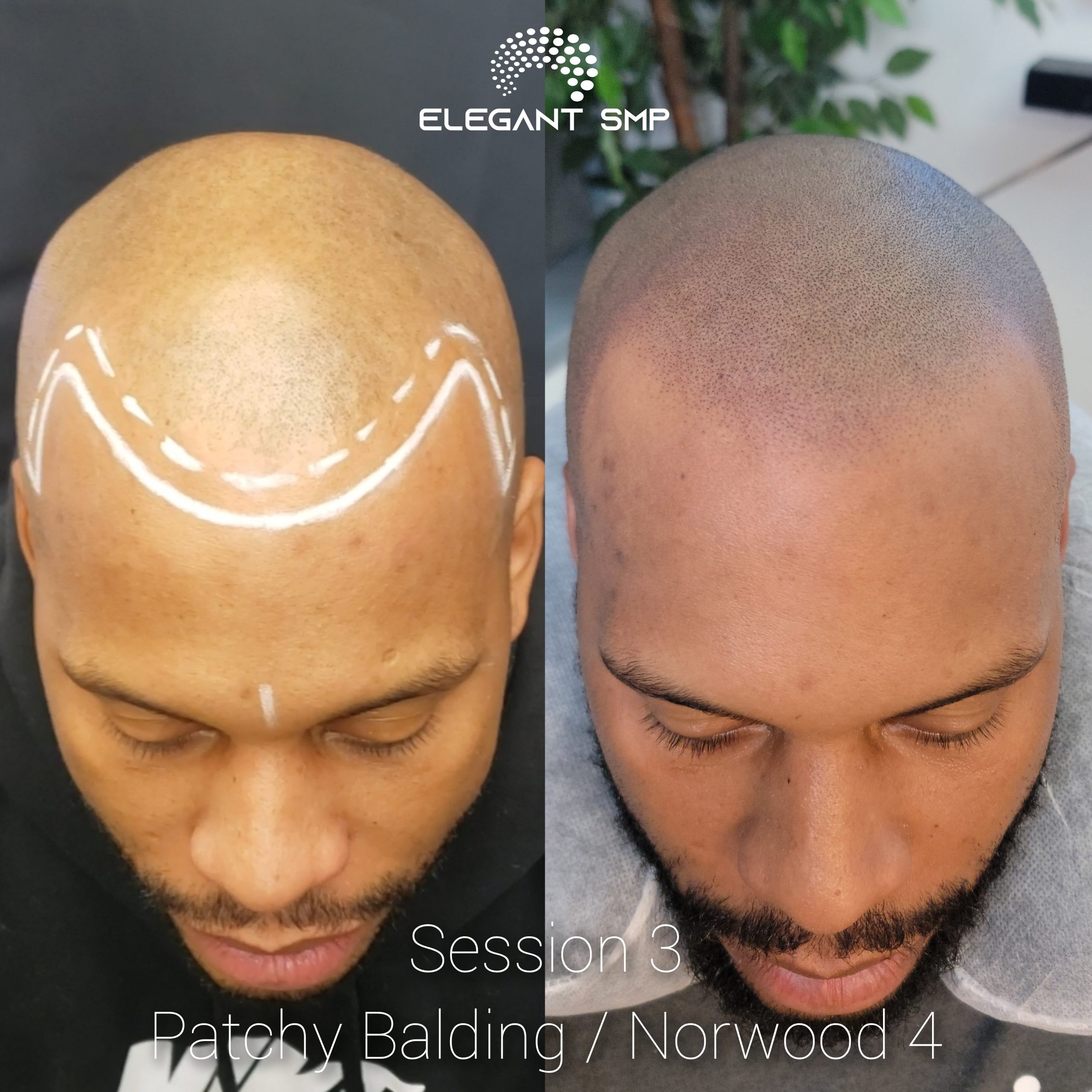
You went through a hair transplant. You did the research, you paid the money, you went through the recovery. And now you're left with a scar that shows every time you cut your hair short. For a lot of guys, that scar becomes its own source of frustration, sometimes worse than the hair loss that drove them to surgery in the first place.
Scalp micropigmentation is one of the most effective ways to address this. It won't erase a scar, but it can make one virtually undetectable. Here's what you need to know before you consider it.
Table of Contents
The Difference Between FUE and FUT Scars
Not all transplant scars are the same, and understanding which type you have matters when you're thinking about SMP coverage.
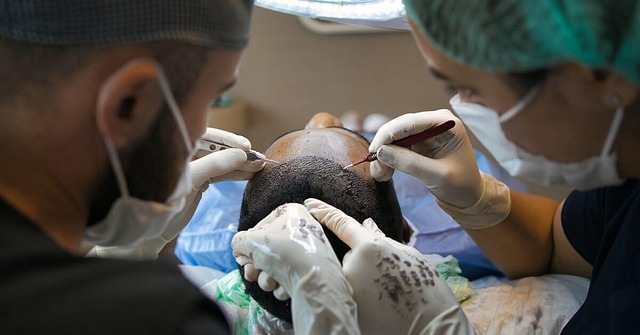
FUT, or follicular unit transplantation, is the older strip method. A horizontal strip of scalp is removed from the donor area at the back of the head, the follicles are harvested from it, and the incision is sutured closed. What this leaves behind is a linear scar running across the back of the head. Depending on the surgeon's technique, your healing, and how your skin forms scar tissue, that line can range from very faint to quite visible. For anyone who wants to wear their hair at a short length, this scar is often the main concern.
FUE, or follicular unit extraction, removes individual follicles directly from the scalp using a small punch tool. Instead of one linear scar, it leaves behind a scattered pattern of small circular marks across the donor area. These are generally less noticeable than a FUT scar at longer lengths, but at a short shaved length they can create a dotted or mottled texture that stands out against the surrounding scalp.
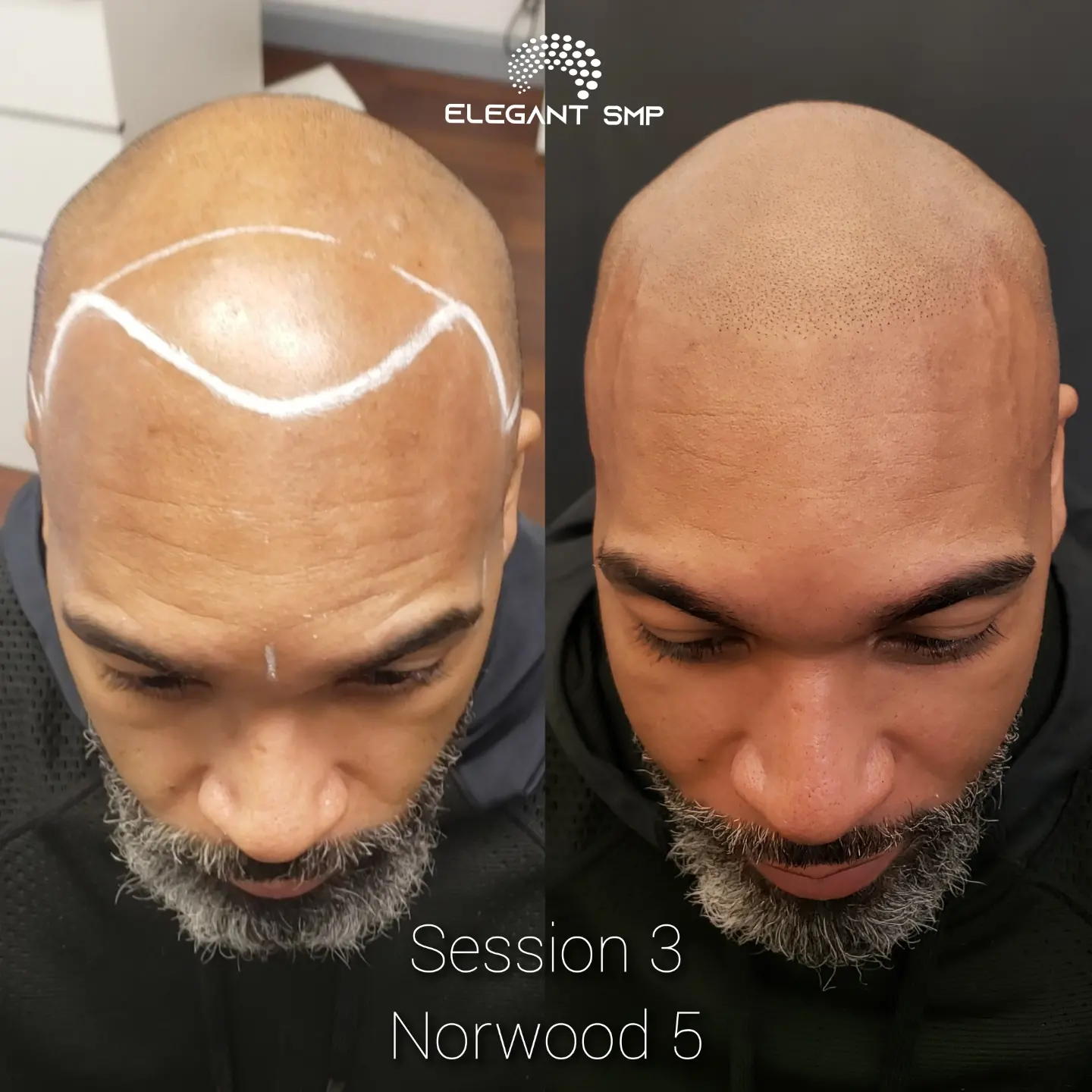
Both types are very treatable with SMP. The approach is essentially the same. Pigment dots are placed into and around the scar tissue to blend the scarred area with the surrounding scalp, reducing the contrast and making the scar fade into the background.
Why You Need to Wait at Least a Year
This is the part a lot of people want to skip, and I understand why. If you've just had a transplant and you're already thinking about your next step, the wait feels frustrating. But the one-year minimum before SMP scar coverage isn't arbitrary.
Scar tissue continues to change and mature for up to a year after surgery. In the early months it can still be raised, discolored, or actively remodeling. Doing SMP on a scar that hasn't fully settled creates two problems. First, you can't accurately color match pigment to a scar that's still changing. Second, the scar tissue itself behaves differently as it matures, and what looks good at three months can look off by month twelve when everything has finally settled.
Waiting the full year means you're working with stable tissue. The scar has reached its final form, the color and texture have settled, and any SMP work we do is going to hold and look accurate long term. It's worth the patience.
How the Process Works
SMP scar coverage generally takes two sessions to complete. This is fewer than a full SMP treatment for hair loss, which is typically three sessions, because we're working on a defined area rather than the entire scalp.
The first session establishes the coverage. Pigment is placed throughout the scar area, beginning to break up the contrast between the scar and the surrounding skin. Depending on the scar's width, depth, and texture, the first session alone can make a significant difference.
The second session, done after healing from the first, refines the work. We assess how the pigment settled into the scar tissue, add density where needed, and make sure the blend with the surrounding scalp looks seamless.
It's worth understanding that scar tissue holds pigment differently than normal scalp skin. It's denser and less vascular, which means it can be less receptive to pigment on the first pass. This is completely normal and part of why the two-session approach works well. We build the coverage gradually rather than overloading the tissue in one session.
What Results Actually Look Like
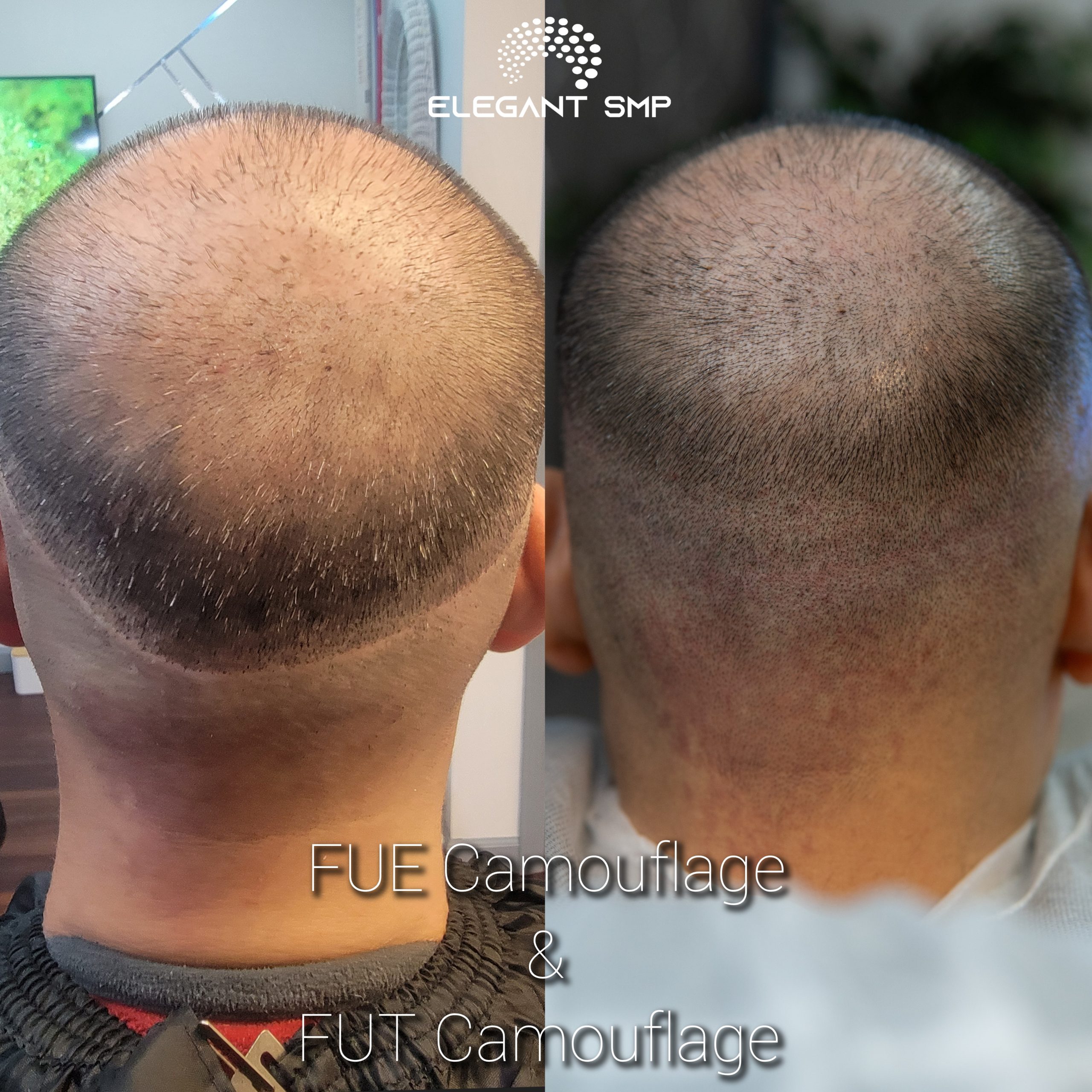
The goal with scar coverage is not perfection under a magnifying glass. It’s undetectability at normal viewing distance and in normal lighting. For the vast majority of clients, that goal is very achievable.
A well-done FUT scar treatment will reduce a visible linear scar to something that requires close inspection and specific lighting to detect. At a typical shaved length, someone looking at you in conversation won’t see a scar. They’ll see a consistent scalp.
FUE scar coverage evens out the mottled texture of the donor area, creating visual consistency that makes the scattered extraction marks blend into the surrounding skin rather than stand out against it.
What SMP cannot do is change the physical texture of a scar. If a FUT scar is raised or has significant texture variation, the pigment will reduce the visual contrast but won’t alter the feel of the tissue. For most people standing in front of a mirror or interacting with the world, this doesn’t matter at all. It only comes up if someone is running their hands over your head specifically looking for it.
Is SMP Right for Your Scar?
The best candidates for SMP scar coverage are people who are at least a year out from their transplant, whose scar has fully matured, and who want to wear their hair at a short length without the scar being visible.
If you had a FUT procedure and have avoided short haircuts ever since specifically because of the scar, this is likely a good fit for you. If you had FUE and notice the donor area looks uneven or patchy at short lengths, SMP can address that too.
The honest answer is that a consultation is the right way to evaluate your specific situation. Scars vary significantly. Some are faint and need minimal work. Others are wider or more complex and need a thorough assessment before I can tell you exactly what to expect. I'd rather look at it directly and give you an accurate picture than make promises based on a general description.
If you had a hair transplant and you're dealing with scarring that's affecting how you feel about your appearance, this is a conversation worth having. Reach out and let's take a look at what's possible.
Book a free consultation at Elegant SMP
Tommy T is the owner and practitioner at Elegant SMP in Buffalo, NY. He has over 4 years of experience in scalp micropigmentation and has undergone the procedure himself.