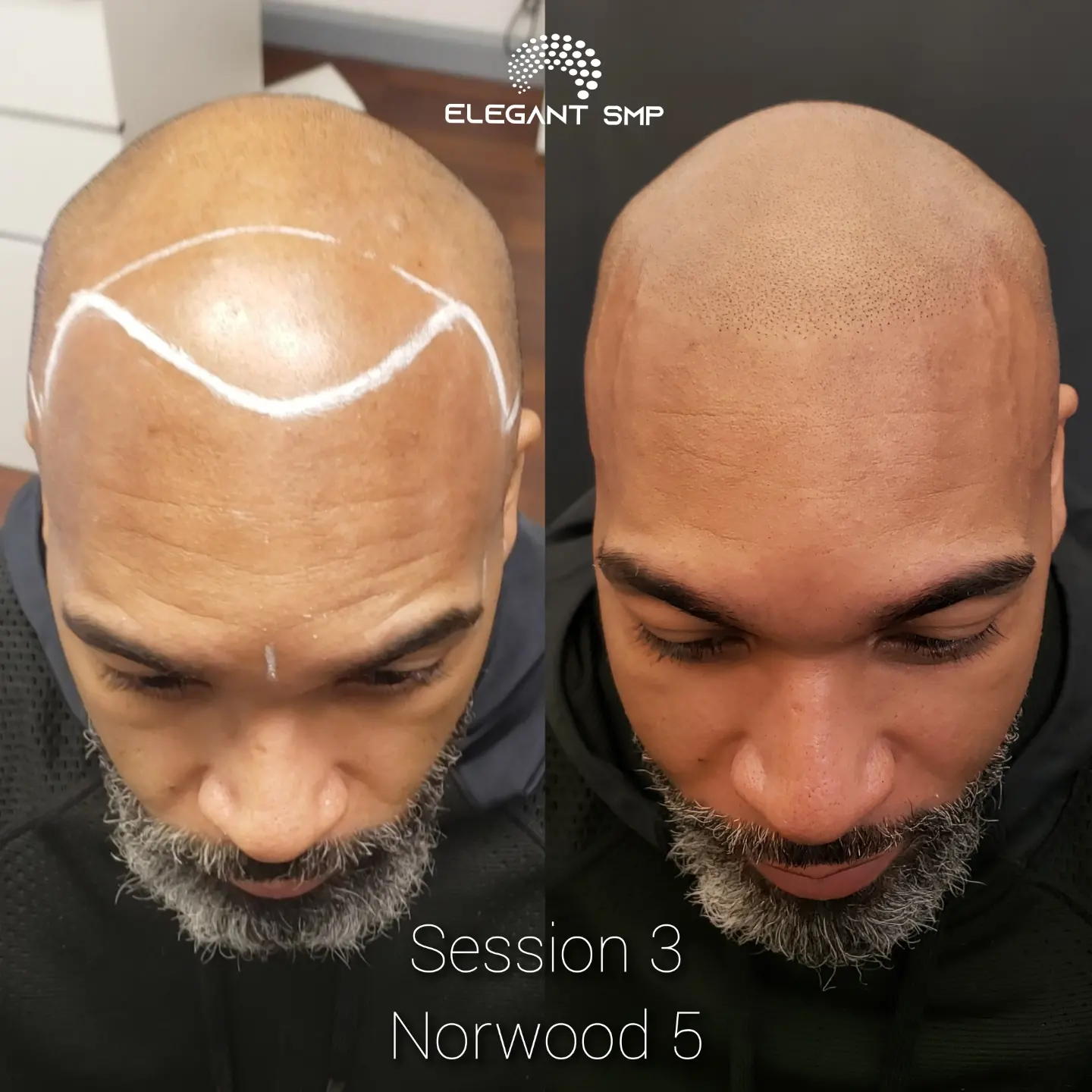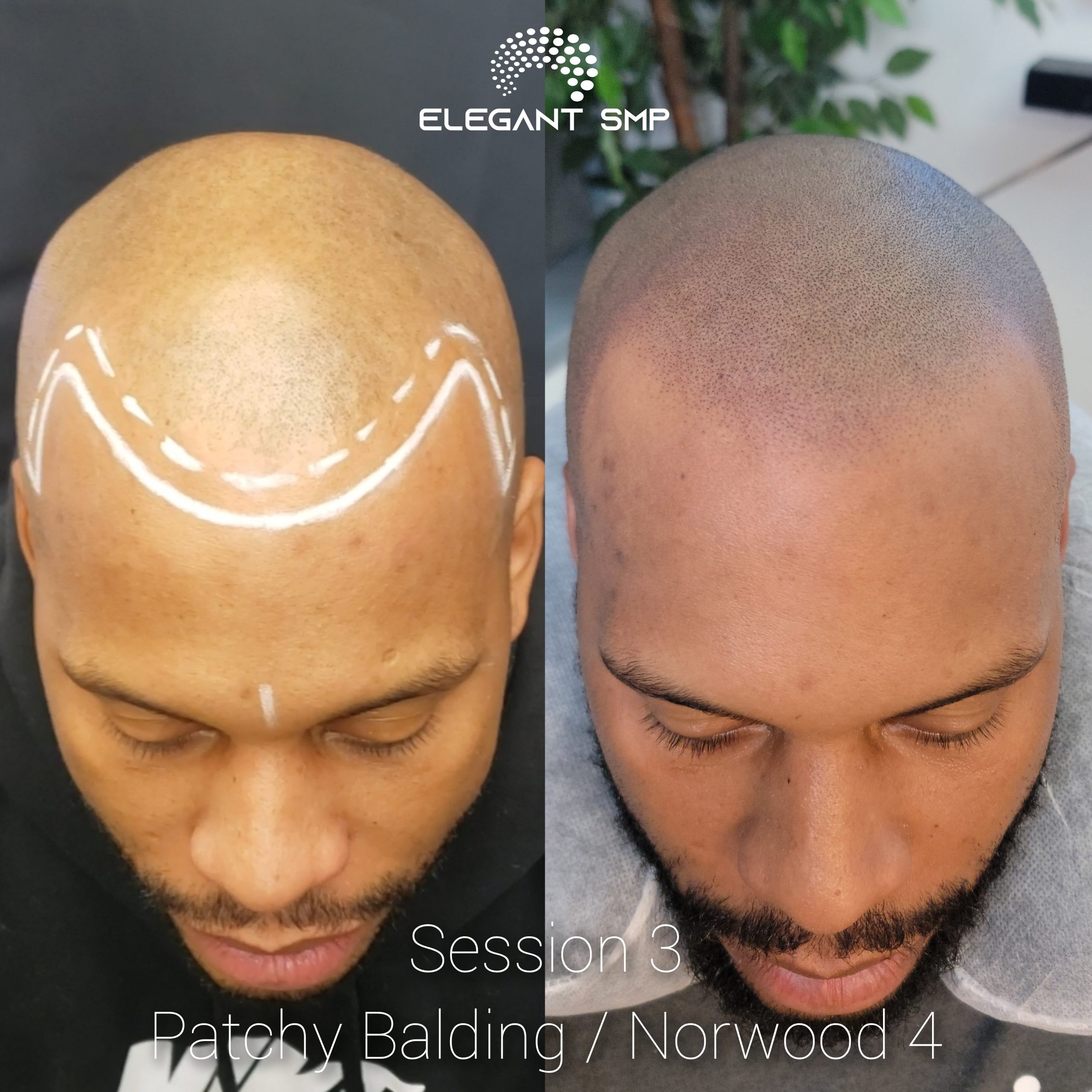


If you’ve spent any time researching scalp micropigmentation, you’ve probably come across photos that made you stop and cringe. A guy with a bluish or greenish tint across his scalp where his SMP used to look like hair. It looks terrible, and if you’re considering the procedure, it’s a completely reasonable thing to be worried about.
So let’s talk about it honestly. Yes, SMP can turn blue or green. But it doesn’t have to, and understanding why it happens is the best way to reduce the chance of it happening to you.
Table of Contents
Why Does SMP Turn Blue or Green?
The short answer is bad technique combined with the wrong pigment formulation for the job. Let me break down what actually causes it.
The Pigment Formulation Problem
There's a debate in the SMP industry about whether "SMP pigments" and "tattoo inks" are really that different, and honestly, it's a fair debate. A lot of pigments marketed specifically for SMP share similar bases with quality tattoo inks, and some experienced artists use both. The hard line between the two isn't as clear as some people make it out to be.
What does matter is the specific formulation. Pigments that are heavy in carbon or certain iron oxides are more prone to shifting color over time, especially with sun exposure. These compounds can break down unevenly and take on that bluish or greenish cast you've seen in bad SMP photos. It's not about whether something is labeled "SMP ink" or "tattoo ink." It's about what's actually in it, how it was formulated, and whether it's appropriate for shallow scalp work.
The other thing worth knowing is that pigment behaves differently at different depths in the skin. A formulation that fades beautifully in a traditional tattoo at standard depth can behave completely differently when placed in the upper dermis of the scalp. So it's not as simple as saying one category of ink is always safe and another is always risky. The variables are more specific than that.
The Depth Problem
Even with good pigment, the wrong implantation depth can cause color shifting. SMP pigment needs to be placed in the upper dermis of the scalp. This is a very specific layer. It's deeper than the epidermis, which would cause the pigment to flake out during healing, but it's much shallower than traditional tattooing.
When an artist goes too deep, a few things happen. The dots spread out and lose their crisp definition. The pigment ends up in a layer of skin that handles foreign material differently. And over time, it can migrate and take on that blue or green appearance you've seen in photos of bad SMP.
This is one of the reasons I don't recommend going to a tattoo artist for SMP, even one who says they can do it. The technical discipline of SMP is completely different from traditional tattooing. The depth, the needle, the machine, the pigment, the pressure, all of it is different. SMP-specific training exists for a reason.
The Shade Selection Problem
Color theory matters more in SMP than most people realize. The goal is to match your existing hair color at a shaved length, which for most people means a cool to neutral dark grey rather than a pure black. When an artist goes too dark or chooses a shade that has underlying blue tones in it, the result can look off immediately and get worse over time as the surrounding skin tone changes with age or sun exposure.
A good SMP artist reads your skin undertones carefully. Someone with warm undertones in their skin needs a different pigment mix than someone with cool undertones. Getting this wrong doesn't always cause greening, but it creates mismatches that make the SMP look unnatural and can compound over time.
What Good SMP Looks Like Over Time
When SMP is done correctly with quality pigment at the right depth, the way it changes over time is actually graceful. The dots soften slightly. The overall appearance lightens a touch. It starts to look like a shaved head that's a day or two past a fresh shave rather than a freshly done treatment. That's the natural, lived-in look that makes SMP undetectable.
This is why touch-ups exist. After a few years, a single touch-up session refreshes the density and crispness without starting from scratch. It's a minor investment that keeps everything looking exactly the way it should.
What never happens with properly done SMP is a color shift. The pigment doesn't turn blue. It doesn't go green. It fades neutrally and gracefully, and it stays looking like what it's supposed to look like.
How to Protect Yourself Before You Book
This is the part that actually matters if you're in the research phase. Here's what to look for.
Ask the artist directly what pigment brand they use and why they chose it. A confident, experienced practitioner will have a clear, specific answer about the formulation and what makes it appropriate for scalp work. Vagueness here is a red flag. You want someone who actually understands what they're putting in your skin and can explain it plainly.
Look at healed results, not fresh ones. Fresh SMP always looks crisp. The real test is how work looks three months, six months, a year out. Ask to see healed photos. Any reputable artist will have them.
Check for consistency in their dot work. Clean, uniform dots indicate proper needle control and consistent depth. Blurry, inconsistent dots or any smearing in the healed photos suggest the artist is working at the wrong depth or with the wrong equipment.
Research their training. SMP-specific training programs exist, and they exist because this is a specialized discipline. Knowing where an artist trained and who trained them tells you a lot about their technical foundation.
Avoid the cheapest option in the room. I understand budget is real. SMP ranges from $1,500 to $3,500 depending on the level of hair loss, and that's a meaningful amount of money. But SMP is permanent on the scale of years. A bad job done at a discount price doesn't save you money. It costs you more in corrections, removal attempts, or living with something you're not happy with every day.
My Approach at Elegant SMP
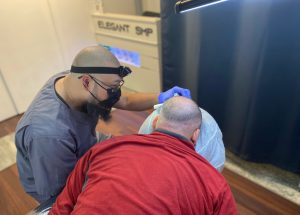
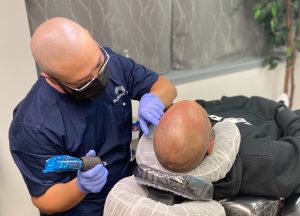
I use pigments I've vetted specifically for how they perform at scalp depth, how they fade over time, and how they hold up against sun exposure. I focus on implantation depth as a core technical discipline, and I've invested over four years into understanding how different skin types, tones, and conditions respond to the procedure. I've also had SMP myself, which means I've experienced both the client side and the practitioner side of this.
The faded, soft hairline technique I use is specifically designed to look natural over time. Hard, straight hairlines with heavy density age poorly. A feathered, graduated approach ages the way real hair does, and it's far more forgiving as the pigment naturally softens over the years.
If you have questions about your specific situation, the best next step is a consultation. We'll look at your hair loss, your skin tone, your goals, and I'll tell you exactly what to expect before you ever commit to anything.
Book a free consultation at Elegant SMP
Tommy T is the owner and practitioner at Elegant SMP in Buffalo, NY. He has over 4 years of experience in scalp micropigmentation and has undergone the procedure himself.